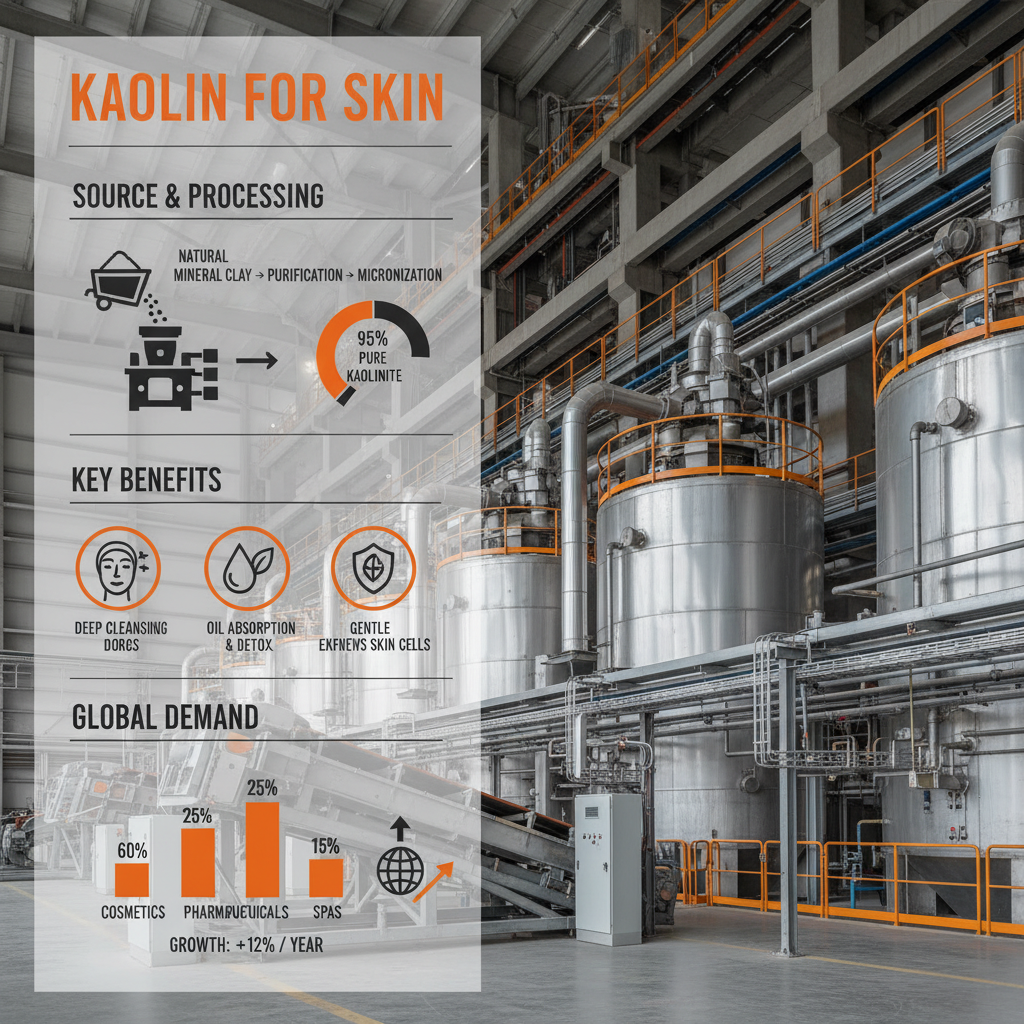
Kaolin, a naturally occurring white clay, has a long and fascinating history, extending back millennia to ancient civilizations. However, its application to skincare is a rapidly growing field, fueled by increased consumer awareness of natural ingredients and a desire for gentle yet effective products. Understanding the properties of kaolin for skin – its absorbency, mild exfoliation, and soothing qualities – is key to unlocking its benefits for a diverse range of skin types and concerns. This knowledge is globally relevant as demand for natural skincare solutions continues to rise across continents.
The global skincare market is a multi-billion dollar industry, with a significant portion dedicated to clay-based products. Data from market research firms consistently shows a growing preference for natural and organic ingredients, with kaolin featuring prominently. The challenge lies in sourcing high-quality kaolin and formulating it effectively to maximize its benefits while minimizing any potential irritation. The need for sustainable sourcing and ethical production practices is also a driving force in the industry.
Kaolin’s gentle nature makes it particularly valuable in addressing concerns related to sensitive skin and various dermatological conditions. From facial masks and cleansers to cosmetic formulations, kaolin is increasingly recognized for its ability to promote a healthy, radiant complexion. The accessibility and relatively low cost of kaolin also contribute to its widespread adoption.
Introduction to Kaolin for Skin
Kaolin clay, in the context of skincare, refers to a specific type of clay mineral composed primarily of kaolinite. Its origins trace back to the Kao-lin mountains in China, where it was historically used in porcelain production. Modern skincare utilizes kaolin's unique properties – its fine particle size, low shrinkage, and gentle absorptive capabilities – to address various skin concerns. The benefits of using kaolin for skin are becoming increasingly recognized.
Different types of kaolin exist, each possessing slightly different characteristics. White kaolin is the most common type used in cosmetics due to its purity and gentle nature. Pink kaolin, containing a higher iron oxide content, offers a slightly more abrasive exfoliation. Understanding these variations is crucial for formulators seeking to tailor products to specific skin types.
Defining Kaolin for Skin
Kaolin for skin is essentially a refined clay powder used as an ingredient in skincare products. Unlike some other clays, such as bentonite, it has a very mild pH and doesn’t swell significantly when mixed with water, resulting in a gentler action on the skin. This makes it suitable for sensitive skin that might react negatively to more aggressive clays.
Its primary function in skincare revolves around its absorbent properties, drawing out impurities, excess oil, and toxins from the pores. It also possesses mild exfoliating qualities, helping to remove dead skin cells and reveal a brighter complexion. Kaolin for skin offers a natural alternative to harsh chemical exfoliants.
The connection to modern industry isn’t limited to cosmetics. Kaolin also finds applications in pharmaceuticals, ceramics, and paper production, demonstrating its versatility and widespread utility. However, its growing role in the ‘clean beauty’ movement is what’s driving much of the recent innovation surrounding its use in skincare.
Key Properties of Kaolin for Skin
The primary characteristic of kaolin is its exceptional absorbency. This allows it to effectively draw out excess sebum (oil), dirt, and environmental pollutants from the skin’s surface and pores, helping to prevent breakouts and promote a clearer complexion. It’s this property that makes it so valuable in masks for oily or acne-prone skin.
Kaolin also exhibits a very gentle exfoliating action. The fine particles of clay mechanically remove dead skin cells, revealing smoother, brighter skin. This exfoliation is mild enough for daily use, unlike harsher chemical exfoliants that can cause irritation. This contributes significantly to its appeal for sensitive skin types.
Further, kaolin possesses soothing and calming properties, thanks to its mineral content. It can help to reduce redness and inflammation, making it beneficial for conditions like eczema or rosacea. It acts as a protective barrier on the skin, helping to shield it from environmental aggressors.
Global Applications of Kaolin for Skin
Kaolin’s applications in skincare are widespread across the globe. In Asia, particularly in countries like China, Japan, and Korea, kaolin has been a traditional skincare ingredient for centuries, often incorporated into masks and cleansers. These regions emphasize gentle, natural ingredients and holistic skincare routines.
In Europe and North America, the demand for kaolin for skin is growing rapidly, driven by the popularity of ‘clean beauty’ and ‘K-beauty’ trends. Numerous skincare brands now feature kaolin as a key ingredient in their formulations, targeting a wide range of skin concerns.
Even in remote areas, kaolin can be utilized for traditional skincare practices. Indigenous communities have long utilized clay for its purifying and healing properties, demonstrating its universal appeal and accessibility.
Effectiveness of Kaolin for Skin Treatment Methods
Advantages of Utilizing Kaolin for Skin
The primary advantage of kaolin for skin is its gentle yet effective cleansing action. It doesn’t strip the skin of its natural oils like some harsher cleansers, making it suitable for all skin types, particularly sensitive skin. This reduces the risk of irritation and dryness.
Kaolin is also a sustainable and environmentally friendly ingredient. It’s a naturally occurring mineral, requiring minimal processing. Using kaolin for skin contributes to a more sustainable beauty routine.
Future Trends in Kaolin Skincare
We're likely to see increased innovation in kaolin-based formulations, focusing on targeted treatments for specific skin concerns. Combining kaolin with other active ingredients, such as antioxidants or vitamins, will likely become more prevalent.
The development of more sustainable and ethical sourcing practices for kaolin will also be a key trend, responding to growing consumer demand for transparency and responsible production.
Personalized skincare routines, utilizing kaolin blends tailored to individual skin types, represent another promising avenue for future development.
Challenges and Solutions Regarding Kaolin for Skin
One challenge is ensuring the purity and quality of kaolin sources. Contamination with heavy metals or other impurities can compromise its safety and effectiveness. Rigorous testing and sourcing from reputable suppliers are crucial.
Another concern is the potential for kaolin to dry out the skin if used excessively. Balancing its use with hydrating ingredients and avoiding overuse are essential.
Finally, formulating kaolin effectively requires careful consideration of particle size and dispersion. Poorly dispersed kaolin can lead to a gritty texture and reduced efficacy. Utilizing micronized kaolin and incorporating appropriate dispersing agents can address this issue.
Summary of Kaolin Sourcing, Purity, Formulation, and Usage
| Sourcing Region |
Purity Level (1-10) |
Formulation Difficulty (1-10) |
Optimal Usage Frequency |
| China |
8 |
6 |
2-3 times per week |
| Brazil |
7 |
5 |
1-2 times per week |
| United States |
9 |
4 |
3-4 times per week |
| India |
6 |
7 |
1 time per week |
| Thailand |
7.5 |
5.5 |
2 times per week |
| Australia |
8.5 |
4.5 |
2-3 times per week |
FAQS
Kaolin clay is much gentler than bentonite clay. Bentonite is highly absorbent and can be too drying for sensitive or dry skin types. Kaolin absorbs less oil and has a milder exfoliating effect, making it a better choice for those prone to irritation or redness. Both clays draw out impurities, but kaolin is considered the more forgiving option.
While kaolin is gentle, daily use isn't generally recommended, especially if you have dry or sensitive skin. Over-exfoliation can disrupt the skin’s natural barrier. 2-3 times a week is a good starting point, and you can adjust based on how your skin responds. Always follow with a good moisturizer to replenish hydration.
Kaolin is generally considered safe for all skin types, including sensitive skin. However, it’s always wise to do a patch test on a small area of skin before applying it to your entire face, especially if you have allergies or known sensitivities. If irritation occurs, discontinue use.
Typically, a kaolin clay mask should be left on for 10-15 minutes. You’ll know it’s time to rinse when the mask starts to dry but isn’t cracking or uncomfortable. Avoid letting the mask dry completely, as this can draw too much moisture from the skin.
Look for reputable skincare brands that specifically list ‘kaolin’ (or ‘white kaolin’) as an ingredient. You can also purchase pure kaolin clay powder from cosmetic ingredient suppliers online. Ensure the supplier is transparent about the sourcing and purity of their clay.
Kaolin clay pairs beautifully with hydrating ingredients like hyaluronic acid, glycerin, and aloe vera. Adding a few drops of facial oil (like jojoba or argan oil) to your clay mask can also prevent excessive dryness. Antioxidants like vitamin C can further enhance the benefits by protecting the skin from free radical damage.
Conclusion
In conclusion, kaolin for skin represents a gentle, effective, and increasingly popular approach to skincare. Its unique properties – absorbency, mild exfoliation, and soothing qualities – make it suitable for a wide range of skin types and concerns. Its natural origins and sustainable sourcing potential further enhance its appeal in today’s conscious consumer market. Understanding the nuances of kaolin, from different clay types to effective formulations, is crucial for maximizing its benefits.
Looking ahead, continued innovation in kaolin-based products, coupled with a commitment to ethical and sustainable sourcing, will undoubtedly solidify its position as a staple ingredient in the skincare industry. We encourage you to explore the potential of kaolin and incorporate it into your routine to experience its transformative effects. Visit our website at www.huabangmica.com to learn more about our kaolin products and resources.