Look, I’ve spent the last fifteen years wading through mud on construction sites, smelling concrete dust, and frankly, getting to know basements intimately. I’ve seen waterproofing failures that cost homeowners a fortune, and I’ve seen solutions that just…work. And when it comes to reliable, long-term basement waterproofing, bentonite clay consistently rises to the top. It’s not flashy, it’s not a high-tech gimmick, it’s just a fundamentally sound approach that leverages a naturally occurring material to create an impermeable barrier. It’s the quiet workhorse of the waterproofing world, and frankly, a lot of the newer “solutions” don’t hold a candle to it.
What I've learned over the years is that the best waterproofing isn't about applying some magic coating; it's about understanding the pressures at play - the soil saturation, the hydrostatic pressure, the groundwater table. Bentonite clay, when properly installed, expands when it comes into contact with water, essentially self-sealing cracks and creating a robust, self-healing barrier. I’ve seen it work on old stone foundations, poured concrete walls, and everything in between. It’s a simple concept, but the execution, like with anything construction-related, is key.
The real benefit of bentonite clay basement waterproofing isn't just stopping water, it's preventing the long-term structural damage that moisture intrusion causes. We’re talking about preserving foundations, protecting investments, and preventing mold growth that can ruin a home’s interior. It’s about peace of mind for the homeowner, and frankly, fewer late-night calls for me fixing problems down the line.
Understanding Bentonite Clay: A Practical Overview
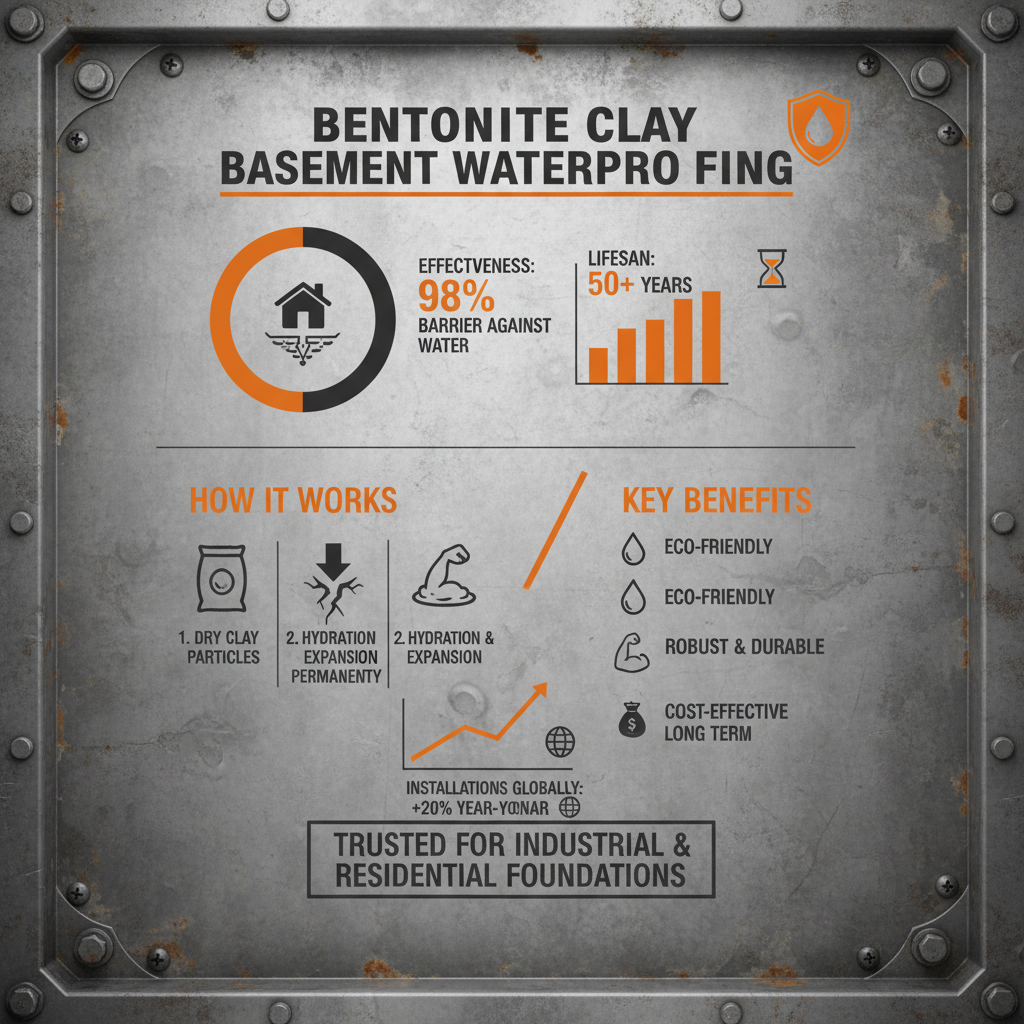
Bentonite clay isn’t some newfangled invention; it’s been used for centuries. Geologically speaking, it’s formed from the weathering of volcanic ash, and its key characteristic is its ability to absorb massive amounts of water and expand significantly. We're talking up to 18 times its dry volume. In the context of basement waterproofing, that expansion is critical – it fills voids, cracks, and gaps, creating a watertight seal. It's a naturally occurring material, readily available, and relatively inexpensive, which are all big pluses on a job site.
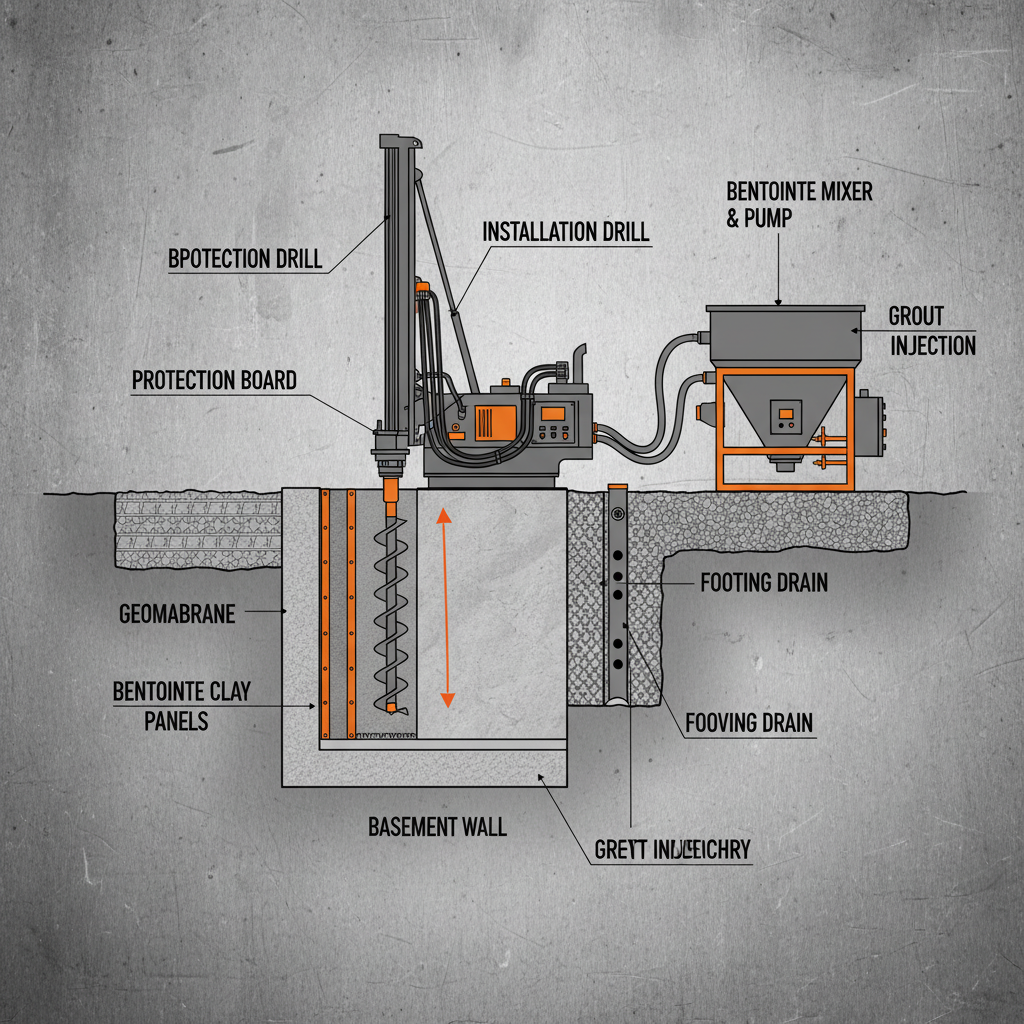
You see it applied in a few different ways, but the most common is as a granular material mixed with water to form a gel, or as pre-formed panels. The method you choose really depends on the specific foundation type and the extent of the waterproofing needed. But the underlying principle remains the same: leveraging the expansive properties of bentonite clay to block water intrusion. You can also find it combined with other materials, like geotextiles, to provide additional structural support.
The Science Behind the Seal: How Bentonite Works
Let’s get a little technical, but I’ll keep it real. Bentonite clay is a montmorillonite clay, meaning it has a unique layered structure. These layers hold a negative charge, attracting water molecules. When water penetrates, it gets trapped between these layers, causing the clay to swell. This swelling creates a pressure against the foundation walls, effectively sealing any cracks or gaps. It’s not just about blocking water; it’s about creating a self-healing system.
Hydrostatic pressure is the enemy in basement waterproofing. It’s the weight of the water in the soil pushing against your foundation walls. Bentonite clay, due to its swelling capacity, can withstand considerable hydrostatic pressure. More importantly, if a new crack develops, the clay will migrate to fill it, restoring the barrier. That self-sealing capability is something you don't get with most other waterproofing methods.
And it's not just about water. Bentonite also inhibits the growth of mold and mildew, which is a huge benefit. A damp basement is a breeding ground for these things, and bentonite clay basement waterproofing helps prevent that from happening.
Durability and Longevity: A Long-Term Investment
I’ve seen bentonite clay systems last for decades, and that’s what I tell homeowners: this isn’t a quick fix, it’s a long-term investment. Unlike some coatings that degrade over time and require reapplication, properly installed bentonite clay remains effective for the lifespan of the foundation. That’s a huge cost savings down the road.
The key to longevity is proper installation. It needs to be applied correctly, at the right thickness, and with appropriate drainage systems in place. Skimping on installation is where I see most failures happen. You’ve got to follow the manufacturer’s guidelines to the letter. It's not a DIY project, let me tell you.
The stability of the clay itself is also a factor. Bentonite clay is chemically inert, meaning it doesn’t react with other materials or break down over time. That’s a big advantage in a harsh underground environment where it’s constantly exposed to moisture and soil chemicals.
Cost-Effectiveness: Balancing Initial Costs with Lifecycle Value
Let’s talk dollars and cents. Initially, bentonite clay waterproofing might not be the cheapest option upfront. There are coatings and membranes that are less expensive to install. But you have to look at the total cost of ownership. Those cheaper options often require more frequent maintenance, repairs, or even complete replacement.
With bentonite clay basement waterproofing, you’re paying for a solution that will last for decades, minimizing long-term costs. Plus, the prevention of mold and structural damage can save you a fortune in remediation and repairs. When you factor in those potential expenses, bentonite clay becomes a very cost-effective choice.
Comparative Cost Analysis of Basement Waterproofing Methods
Real-World Applications: Case Studies and Project Examples
I’ve used bentonite clay on everything from historic brownstones in Boston to new construction in Florida. I recently worked on a project where a homeowner had tried several other waterproofing methods, all of which failed. We excavated around the foundation, applied a bentonite clay barrier, and installed a proper drainage system. It’s been dry as a bone ever since.
Another case involved a large commercial building with a severely leaking basement. The owner was facing massive repair costs. We opted for a bentonite clay panel system, which was quicker to install than other options and provided a robust, long-lasting solution. The building owner was thrilled.
Advantages Over Alternative Waterproofing Methods
Compared to other methods, bentonite clay offers several key advantages. Coatings can crack and peel, membranes can be punctured, and injection methods don’t always address the root cause of the problem. Bentonite clay's self-sealing capability and ability to withstand hydrostatic pressure are major differentiators.
It’s also more environmentally friendly than some of the chemical-based alternatives. Bentonite clay is a natural material, and it doesn’t release harmful VOCs. It's a win-win: effective waterproofing and a smaller environmental footprint.
You're also dealing with a material that's forgiving. Small imperfections in the installation are less critical with bentonite clay than with other systems, because of its swelling and self-sealing properties.
Installation Best Practices and Potential Challenges
Proper installation is paramount. This means thorough site preparation, correct clay application, and a well-designed drainage system. You need to ensure the clay is properly hydrated and compacted. And you need to protect it from damage during backfilling.
One challenge can be dealing with existing roots. If there are tree roots close to the foundation, they can potentially puncture the clay barrier. It's crucial to address any root issues before installing the waterproofing system. Another challenge is ensuring proper soil conditions. Highly organic soils can interfere with the clay’s performance.
Finally, and this is a big one: always follow the manufacturer’s instructions. Each bentonite clay product is a little different, and it's essential to use the correct installation techniques. I’ve seen too many projects fail because someone tried to cut corners or deviate from the recommended procedures.
Key Considerations for Bentonite Clay Basement Waterproofing Installation
| Site Preparation |
Clay Application |
Drainage System |
Potential Issues |
| Excavation to foundation level. Removal of debris and vegetation. |
Uniform application of clay (granular or panel). Proper hydration and compaction. |
Installation of perimeter drain tile. Grading to direct water away from foundation. |
Root intrusion. Poor soil conditions. Inadequate drainage. |
| Root barrier installation if necessary. Soil stabilization if required. |
Monitoring clay swelling and expansion. Ensuring complete coverage. |
Filter fabric around drain tile to prevent clogging. |
Improper clay application leading to voids. |
| Assessment of existing foundation cracks. |
Addressing existing cracks with clay injection or patching. |
Regular inspection and cleaning of drainage system. |
Drainage system failure due to clogging. |
| Soil testing to determine soil composition and pH levels. |
Ensuring clay compatibility with soil type. |
Proper slope of the land away from the foundation. |
Insufficient slope leading to water pooling. |
| Detailed documentation of site conditions before and after installation. |
Photographic evidence of clay application and compaction. |
Inspection of drain tile placement and connection. |
Incorrect clay thickness compromising effectiveness. |
| Adherence to local building codes and regulations. |
Compliance with manufacturer’s specifications. |
Ensuring proper ventilation in basement area. |
Lack of ventilation leading to moisture buildup. |
FAQS
Assuming proper installation and no significant ground shifting, a bentonite clay system can realistically last for 50 years or more. I’ve seen some installations that are older than that still performing well. It’s not a “set it and forget it” scenario – periodic inspections are a good idea – but it's incredibly durable. It's the lifecycle cost that really makes it stand out.
Absolutely. In fact, I often prefer bentonite clay for older stone foundations. The clay can conform to the irregular surfaces and fill in the gaps between the stones, creating a really effective seal. Coatings and membranes can be difficult to apply to uneven stone, but bentonite clay adapts much more easily. Proper preparation is key, though.
That’s a common question. Bentonite clay will shrink when it dries out, but it doesn't lose its ability to swell when it comes into contact with water again. That's the beauty of it – it's self-reactivating. However, prolonged dryness can lead to cracking, so it's important to maintain a consistent moisture level in the surrounding soil, and the drainage system is vital for that.
I strongly advise against it. It's not a simple weekend project. Proper installation requires expertise, specialized equipment, and a thorough understanding of soil mechanics and hydrostatic pressure. A poorly installed system can actually create more problems than it solves. Hire a qualified professional. It will save you money in the long run.
Yes, it’s a very environmentally friendly option. Bentonite clay is a naturally occurring material, and it doesn’t contain harmful chemicals or VOCs. It’s biodegradable and doesn’t pose a threat to groundwater. It’s a much more sustainable choice than many of the synthetic waterproofing products on the market.
The most common causes of failure are improper installation – not enough clay, poor compaction, or inadequate drainage – root intrusion, and shifting soil conditions. A failing drainage system is a big one, because it allows water to build up and overwhelm the clay barrier. Regular inspections and maintenance are essential to prevent these issues.
Conclusion
So, after years of dealing with basement waterproofing issues firsthand, I can confidently say that bentonite clay remains one of the most reliable and cost-effective solutions available. It’s not a miracle cure, it requires proper installation and ongoing maintenance, but when done right, it provides long-lasting protection against water damage and protects the value of your property. It’s a workhorse material that doesn’t get the recognition it deserves.
Don’t fall for the hype of the latest quick fixes. Invest in a proven solution that’s stood the test of time. If you’re facing basement water problems, or want to proactively protect your foundation, I highly recommend exploring bentonite clay basement waterproofing. Visit our website today to learn more and get a free consultation: www.jirunhuabang.com.