
Comprehensive Guide to Calcium Carbonate Manufacturing Plant Processes and Equipment
Back to list
Calcium Carbonate Manufacturing Plant: A Comprehensive Guide
Calcium carbonate (CaCO3) is a versatile industrial mineral with widespread applications ranging from construction and plastics to pharmaceuticals and food. Understanding the processes involved in a calcium carbonate manufacturing plant is crucial for businesses seeking a reliable supply of this essential material. This article delves into the various aspects of CaCO3 production, from raw materials and manufacturing techniques to quality control and applications. We will explore the factors influencing plant design and efficiency, offering valuable insights for procurement and strategic planning.
Raw Materials and Sources for Calcium Carbonate Production
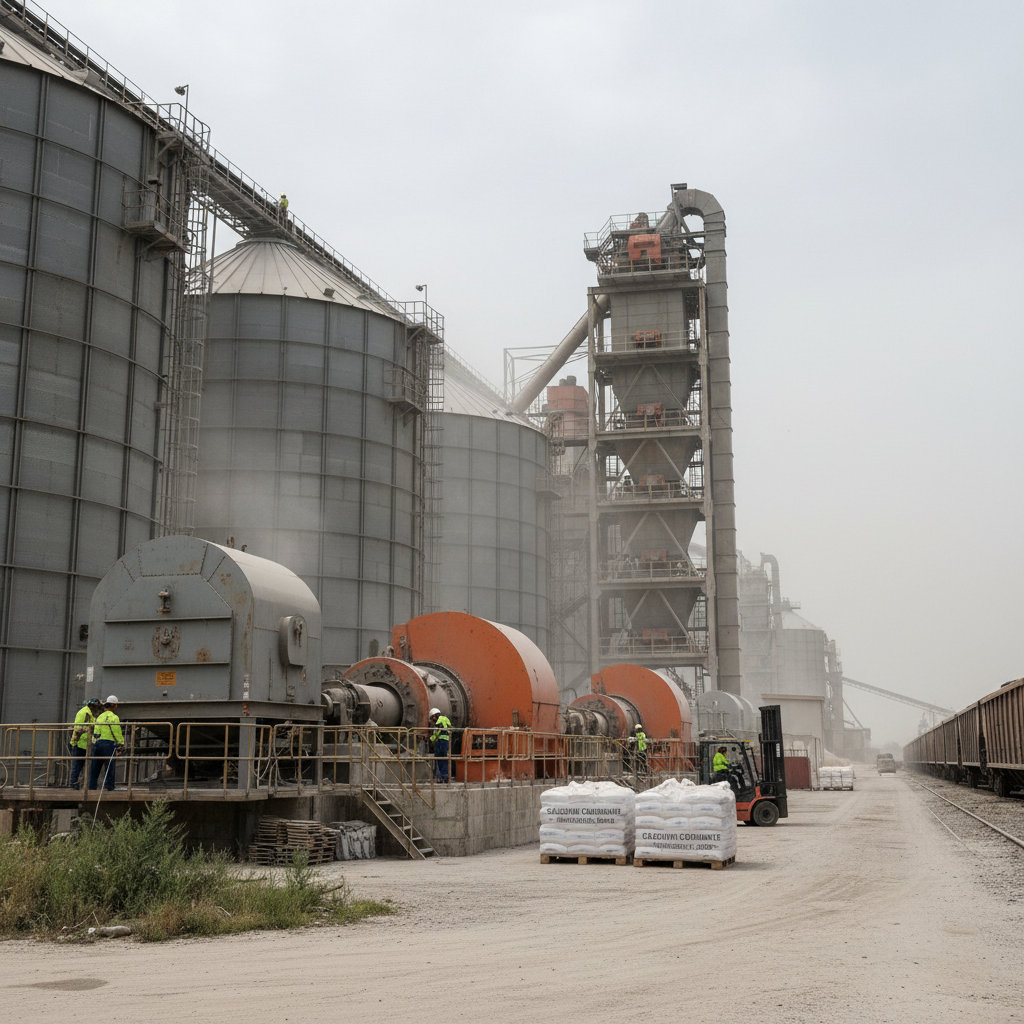
The primary raw material for calcium carbonate production is limestone, calcium-rich sedimentary rock. However, other sources such as chalk, marble, and even industrial by-products can be utilized. The purity of the raw material significantly impacts the final product quality. Generally, a calcium carbonate content of over 95% is desired. Sources vary geographically; prominent limestone deposits are found in the USA, China, India, and Europe. The choice of raw material influences the subsequent processing steps and overall cost-effectiveness of the calcium carbonate manufacturing plant. Considerations include transportation costs, environmental impact, and the need for pre-processing like crushing and grinding.
Key Highlights: The quality and source of limestone heavily influence the production cost and final product characteristics. Sustainable sourcing and minimizing transportation costs are critical for profitability.
Manufacturing Processes: Ground Calcium Carbonate (GCC) vs. Precipitated Calcium Carbonate (PCC)
There are two primary methods for producing calcium carbonate: Ground Calcium Carbonate (GCC) and Precipitated Calcium Carbonate (PCC). GCC is produced by mechanically grinding and classifying naturally occurring limestone. PCC, on the other hand, is produced through a chemical precipitation process. The choice between GCC and PCC depends on the desired particle size, purity, and application. GCC is generally more cost-effective, while PCC offers superior control over particle properties and is often preferred for specialized applications like pharmaceuticals and high-quality paper coatings. A modern calcium carbonate manufacturing plant may incorporate both processes to cater to a wider range of customer needs.
GCC vs. PCC: A Comparison
• GCC: Cost-effective, mechanically produced, larger particle size.
• PCC: Higher purity, controllable particle size, more expensive.
• Applications: GCC for construction; PCC for pharmaceuticals and coatings.
Detailed Production Process of Precipitated Calcium Carbonate (PCC)
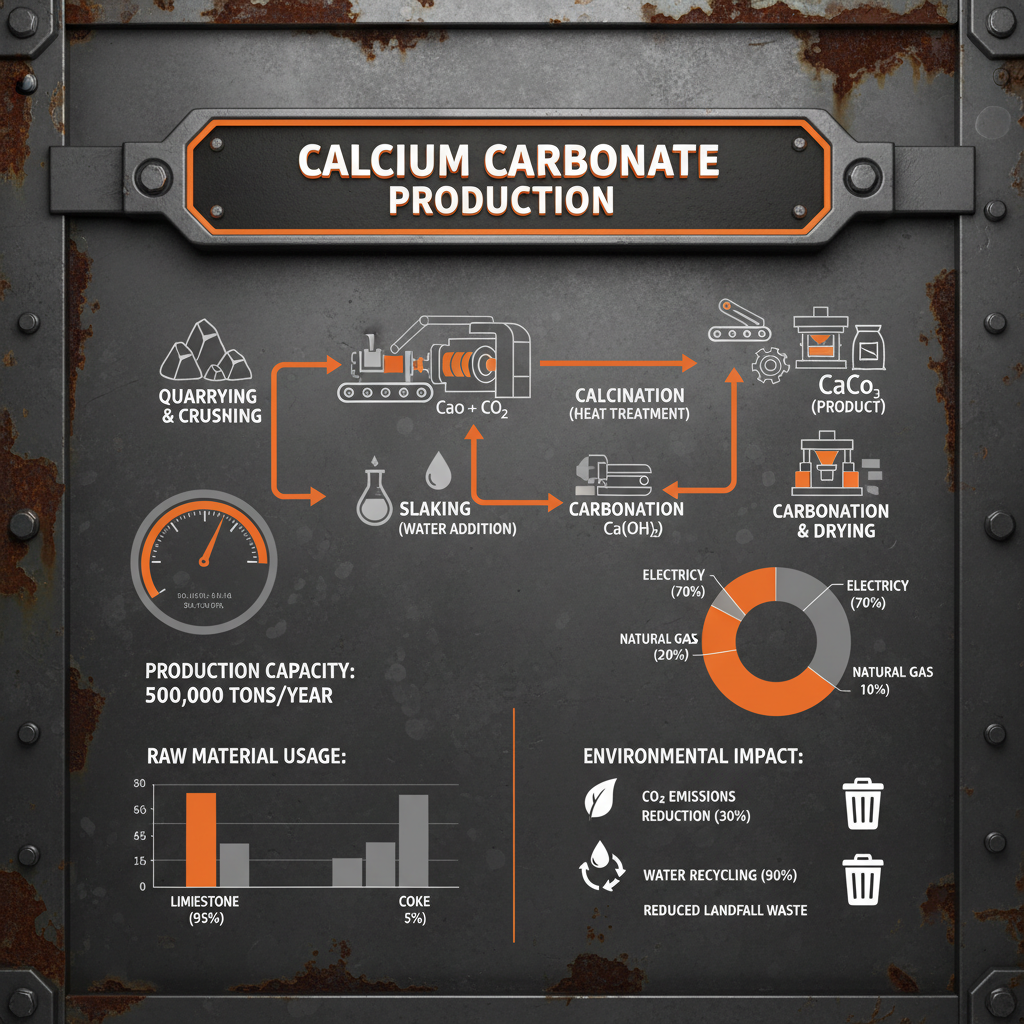
PCC production typically involves the carbonation of calcium hydroxide (slaked lime) with carbon dioxide gas. This process is carefully controlled to produce calcium carbonate particles with specific size, shape, and purity. The key steps include:
- Lime Production: Limestone is heated in a kiln to produce quicklime (calcium oxide).
- Slaking: Quicklime is reacted with water to form calcium hydroxide (slaked lime).
- Carbonation: Calcium hydroxide is reacted with carbon dioxide to precipitate calcium carbonate.
- Filtration & Drying: The precipitated calcium carbonate is filtered, washed, and dried.
- Classification: The dried CaCO3 is classified into different particle sizes.
Optimizing these steps – particularly carbonation time, temperature, and CO2 concentration – is crucial for achieving the desired product characteristics. A well-designed PCC manufacturing plant incorporates sophisticated control systems to ensure consistent quality and efficiency.
Key Equipment in a Calcium Carbonate Manufacturing Plant
A comprehensive calcium carbonate manufacturing plant relies on a range of specialized equipment. This includes: crushers and grinders for raw material processing, kilns for lime production, carbonation reactors for PCC, filters and dryers for product separation, and classification systems for particle size control. Dust collection systems are essential for maintaining air quality and complying with environmental regulations. Efficient material handling systems, such as conveyors and silos, are also critical for smooth operation. Regular maintenance and upgrades of this equipment are vital for ensuring long-term productivity and minimizing downtime.
Quality Control and Applications of Calcium Carbonate
Rigorous quality control is essential throughout the entire manufacturing process. This includes testing raw materials, monitoring process parameters, and analyzing the final product for particle size distribution, purity, whiteness, and other key characteristics. Calcium carbonate finds applications in a multitude of industries. It's a key component in construction materials (cement, concrete, asphalt), plastics (filler, pigment), paper (coating, filler), paints (extender, pigment), adhesives, sealants, food, pharmaceuticals, and cosmetics.
Conclusion: Partnering with a Reliable Calcium Carbonate Supplier
Sourcing high-quality calcium carbonate from a reliable calcium carbonate manufacturing plant like Huabang Mica is critical for ensuring product performance and supply chain stability. We offer a wide range of CaCO3 products tailored to meet specific industry requirements, backed by stringent quality control and responsive customer service. Contact us today to discuss your needs and learn how we can help optimize your operations.
Frequently Asked Questions (FAQs)
What factors influence the cost of calcium carbonate?
Several factors impact calcium carbonate pricing, including raw material costs (limestone quality and availability), energy prices (for kiln operation), transportation expenses, production method (GCC vs. PCC), particle size requirements, and the level of purity needed. Demand and supply dynamics also play a significant role. Choosing a supplier with efficient operations and strategic sourcing can help mitigate cost fluctuations. We at Huabang Mica strive to provide competitive pricing without compromising on quality.
What are the environmental considerations in calcium carbonate production?
Calcium carbonate production can have environmental impacts, primarily related to energy consumption, dust emissions, and CO2 release (especially in PCC production). Modern plants employ technologies to minimize these impacts, such as dust collection systems, efficient kiln designs, and CO2 capture technologies. Sustainable sourcing of limestone and responsible waste management practices are also crucial. Huabang Mica is committed to environmentally responsible production methods.
What is the typical lead time for ordering calcium carbonate from Huabang Mica?
Typical lead times for orders from Huabang Mica depend on the quantity, product specifications, and current production schedule. For standard products, we generally require 7-14 days for delivery. Customized orders may require longer lead times. We strive to provide prompt and reliable delivery to meet our customers' needs. Contact our sales team for a precise quote and estimated delivery date for your specific requirements.
Can Huabang Mica provide calcium carbonate tailored to specific applications?
Yes, Huabang Mica specializes in providing tailored calcium carbonate solutions. We can adjust particle size distribution, purity levels, and other characteristics to meet the specific requirements of your application. Our technical team works closely with customers to understand their needs and develop customized products that deliver optimal performance.