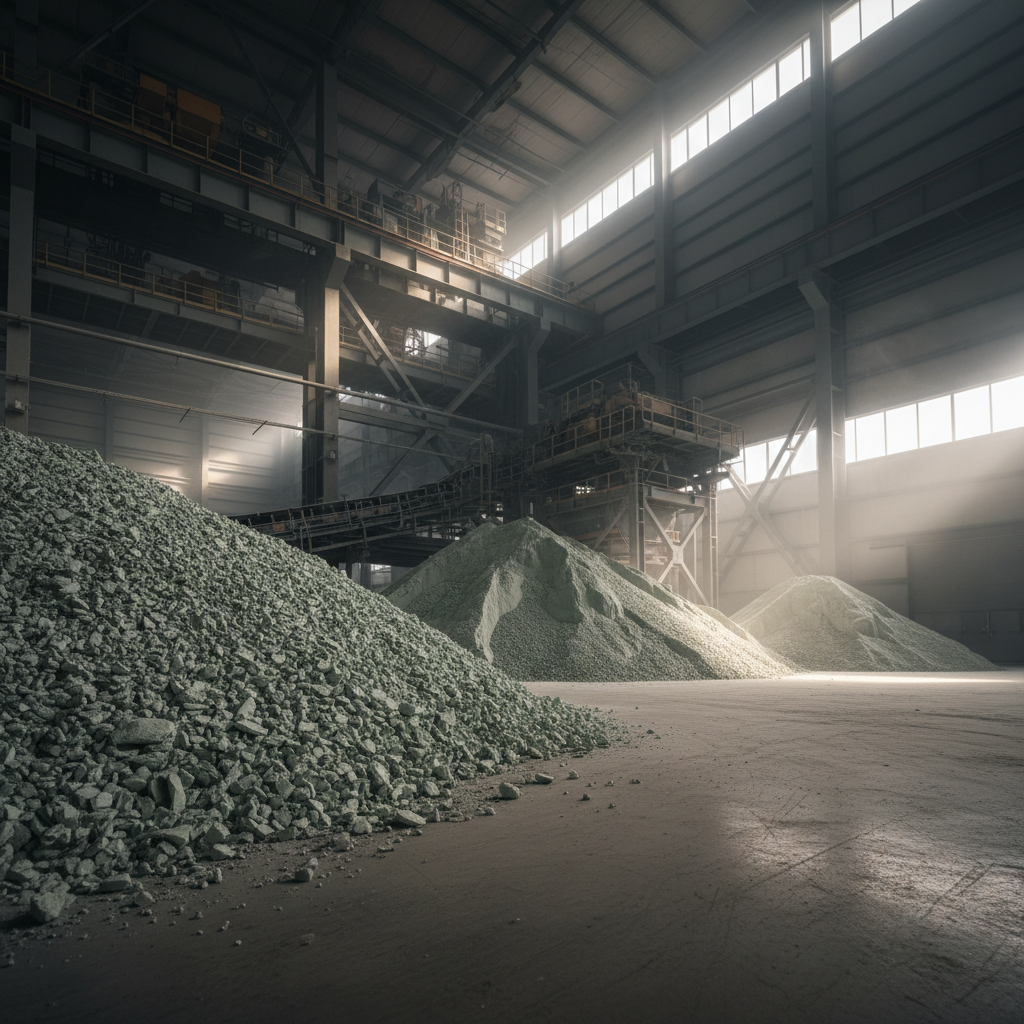
The global industrial minerals market is currently experiencing a nuanced shift in how specialized materials are valued, with the white tourmaline stone price becoming a key indicator for buyers in the high-end mineral filler and additive sectors. Unlike commodity powders, the pricing of specialized tourmaline derivatives is driven by precise crystallographic properties and purity levels required for advanced industrial applications.
This pricing volatility often creates procurement challenges for manufacturers who rely on these minerals to enhance the thermal or electrical properties of their end products. As industries move toward more sustainable and high-performance composite materials, understanding the cost-benefit ratio of specialized non-metal minerals becomes critical for maintaining competitive margins without sacrificing technical specifications.
This analysis explores the primary drivers of mineral pricing, the technical distinctions between industrial-grade fillers, and how procurement professionals can evaluate material quality against cost. By examining the intersection of material science and market economics, we provide a framework for optimizing mineral selection in modern manufacturing.


The valuation of industrial minerals is rarely based on weight alone. Instead, a multi-dimensional framework is used, incorporating the rarity of the mineral deposit, the energy intensity of the refining process, and the specific chemical purity required by the end-user.
For materials like tourmaline or specialized calcium powders, the price is a reflection of the processing chain—from quarrying and crushing to micronization and chemical stabilization.
Particle size distribution (PSD) is perhaps the most critical technical parameter. A narrower PSD typically commands a higher price because it requires more rigorous screening and classification equipment during production. In the context of filler materials, the consistency of the particle shape directly affects the viscosity of the plastic or rubber matrix.
Chemical purity, often measured by the percentage of the primary oxide or mineral component, also plays a decisive role. For instance, high-purity calcium powders (95-99%) are preferred in applications where opacity and whiteness are paramount, as impurities can lead to discoloration or inconsistent mechanical properties in the final product.
Finally, the moisture content and surface treatment of the mineral affect its compatibility with polymers. Minerals that have been pre-treated with silanes or other coupling agents generally exhibit a higher cost but provide significantly better dispersion, reducing the overall amount of material needed to achieve a target performance.
Engineers often face a conflict between achieving theoretical maximum performance and adhering to strict project budgets. Selecting a mineral based solely on the lowest price can lead to increased failure rates due to insufficient material homogeneity.
This trade-off is particularly evident in the rubber industry, where the balance between cost-reduction fillers (like heavy calcium powder) and performance-enhancing additives must be precisely calibrated to avoid compromising tear resistance or abrasion durability.
To understand the relative positioning of different non-metal minerals, we utilize a normalized engineering assessment. This allows us to compare materials with different primary functions—such as fillers, pigments, and stabilizers—on a unified scale.
The following chart evaluates five common industrial mineral profiles based on their relative impact on product stability and cost-efficiency, providing a snapshot of the current market landscape.
In a typical industrial deployment, minerals like limestone powder are integrated into polymer matrices to enhance dimensional stability. The process involves a precise feeding stage where the powder is blended with resins under controlled shear conditions. For high-gloss finishes, the focus is on maximizing the whiteness and purity of the filler to replace more expensive organic pigments.
In rubber compounding, the application focuses on increasing product volume while maintaining tensile strength. This is achieved by optimizing the ratio of heavy calcium powder to natural rubber, ensuring that the filler provides structural reinforcement without creating void sites that could lead to premature tearing under mechanical stress.
The trend in mineral technology is moving toward "functionalization," where minerals are no longer just inert fillers but are engineered to provide specific chemical or physical responses. This includes the development of surface-modified minerals that can improve the bond between inorganic powders and organic polymers.
Furthermore, regulatory pressure to reduce the carbon footprint of manufacturing is driving interest in minerals that can replace carbon-intensive synthetic additives. The ability to source high-purity natural minerals with consistent properties will be a key competitive advantage for suppliers.
As additive manufacturing (3D printing) expands into industrial ceramics and composites, the demand for ultra-fine, highly spherical mineral powders will likely increase, shifting the valuation from bulk tonnage to specialized micron-grade specifications.
Selecting the correct mineral configuration requires a systematic comparison of technical requirements against the intended application. The following matrix provides a decision framework for choosing between different mineral profiles based on performance goals.
It is important to note that these profiles represent general engineering categories rather than specific product models. Buyers should always validate these parameters against the manufacturer's technical data sheets.
The relationship between purity and application is non-linear; for some low-stress components, standard grades are sufficient, while critical aerospace or medical components require the highest precision configurations.
| Configuration Type | Purity Level | Impact Factor | Primary Use Case |
|---|---|---|---|
| Basic Grade | Standard | Cost-Driven | General Construction |
| Standard Industrial | High | Balanced | Plastic Fillers |
| High-Duty Grade | Premium | Mechanical Strength | Automotive Rubber |
| Precision Grade | Ultra-High | Dimensional Stability | Electronic Encapsulants |
| Custom Modified | Variable | Interfacial Bonding | Specialized Composites |
| Industry Baseline | Average | Benchmarking | Standardized Testing |
The price is primarily driven by the mineral's purity, particle size distribution, and the cost of micronization. High-grade materials with minimal impurities and a consistent narrow particle size command a premium because they ensure predictable mechanical properties in high-performance composites. Additionally, the geographical location of the source and the energy costs associated with refining processes contribute significantly to the final market price.
Higher purity minerals, such as those with 95-99% purity, reduce the presence of unwanted organic or metallic contaminants that can cause uneven shrinkage during the cooling phase of injection molding. This results in superior dimensional stability and surface smoothness. Conversely, low-purity fillers may introduce internal stresses, leading to warping or cracks in the final plastic part, especially in precision engineering applications.
Yes, heavy calcium powder serves as a significant filler in the rubber industry to increase product volume and lower the total raw material cost. However, this substitution must be carefully managed. While it reduces cost, excessive loading can decrease the elasticity and tensile strength of the rubber. The goal is to find an optimal loading percentage that balances economic efficiency with the necessary abrasion and tear resistance.
The primary difference lies in the purity standards and the types of contaminants allowed. Feed grade powders are processed to ensure they are free from toxins and meet specific nutritional calcium requirements for animal health. Industrial grade powders focus more on physical properties like whiteness, particle size, and chemical inertness for use in plastics, paints, and rubber. Using industrial grade in feed can be hazardous, while feed grade may lack the aesthetic properties required for industrial plastics.
Evaluation should be based on the supplier's adherence to quality management systems like ISO9001 and their ability to provide consistent Batch Analysis Reports (BAR). Key metrics to check include the standard deviation of the particle size across different shipments and the stability of the purity percentage. A reliable supplier will have advanced analytical instruments to ensure that the material delivered matches the technical specifications exactly.
The industry is shifting toward nano-scale fillers and surface-functionalized minerals. By coating mineral particles with specific chemicals, manufacturers can create a stronger bond between the inorganic filler and the organic polymer matrix. This leads to "smart composites" with improved thermal conductivity, better flame retardancy, and higher strength-to-weight ratios, moving beyond the traditional use of minerals as simple volume extenders.
The analysis of the white tourmaline stone price and other industrial minerals reveals that value is derived from technical precision rather than bulk availability. For manufacturers, the primary finding is that optimizing for purity and particle consistency often leads to lower total production costs by reducing waste and improving the mechanical integrity of the final product.
Ultimately, the transition toward high-performance composites requires a strategic shift in procurement—from buying commodities to investing in specified material properties. By aligning mineral selection with exact engineering requirements, businesses can achieve a sustainable balance between cost-efficiency and technical excellence.