Securing a consistent supply of high-grade minerals often requires moving beyond retail sourcing and entering the realm of industrial procurement. For businesses integrating pyroelectric materials into their manufacturing processes, understanding the nuances of the bulk mineral market is essential for maintaining cost-efficiency and product stability.
The procurement of these minerals is no longer just about volume; it is about the intersection of chemical purity, grain size consistency, and supply chain reliability. As industries from skincare to advanced ceramics evolve, the requirements for raw material inputs have become significantly more stringent, shifting the focus toward certified industrial producers.
Navigating the complexities of tourmaline wholesale involves evaluating not only the price per ton but the technical specifications that ensure the material performs predictably in a production environment.


Tourmaline is distinguished in the non-metallic mineral sector by its unique pyroelectric and piezoelectric properties. Unlike standard fillers, it is utilized in specialized applications where the generation of an electric charge in response to temperature changes or mechanical stress is required.
In the context of bulk manufacturing, this mineral is often processed into specific mesh sizes to be integrated into consumer electronics, water filtration systems, and wellness products. The transition from raw ore to a standardized industrial powder is what defines the value in the wholesale market.
When evaluating sources for tourmaline wholesale, the primary technical metric is the particle size distribution. Whether the end-use requires a coarse grit for abrasive applications or a micro-fine powder for cosmetic integration, the consistency of the mesh size determines the homogeneity of the final product.
Beyond physical dimensions, chemical composition analysis is critical. The presence of trace elements can alter the mineral's electrical properties and its reactivity when mixed with other compounds like Kaolin Clay or Talc Powder. Manufacturers must ensure that the mineral is free from contaminants that could cause unwanted chemical reactions during the sintering or blending process.
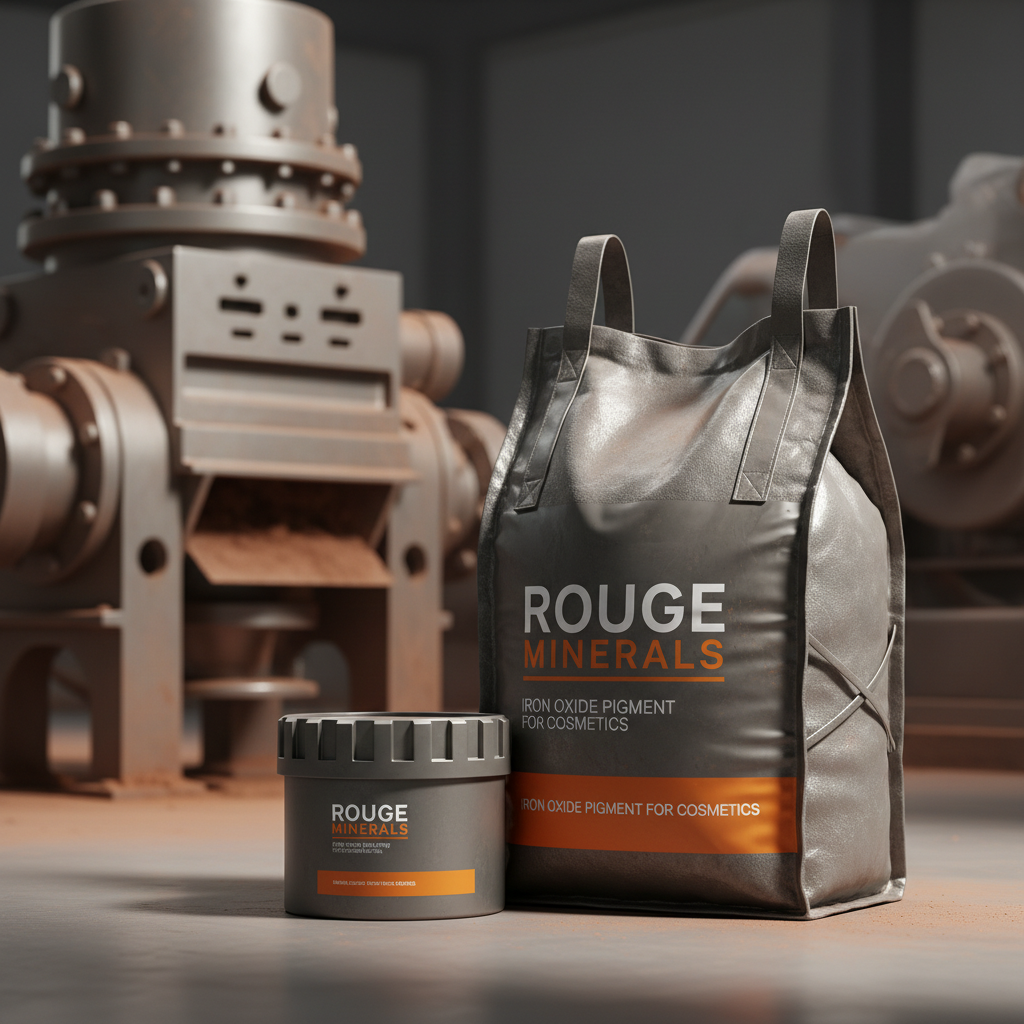
Logistical specifications also play a role in procurement. For large-scale operations, packaging options—ranging from 5kg bags to bulk customized containers—must be aligned with the facility's automated feeding systems to minimize waste and prevent cross-contamination.
The efficacy of non-metallic minerals is directly proportional to their purity levels. In the case of tourmaline, impurities can dampen the pyroelectric effect, rendering the material less effective for high-precision applications.
Industrial-grade mineral purity, typically ranging between 95% and 99%, is the benchmark for ensuring that bulk materials maintain stable performance across different production batches.
Companies like Hebei Runhuabang New Material Technology Co., Ltd. emphasize the importance of strict quality management systems, such as ISO9001, to ensure that every shipment of non-metal minerals meets these purity thresholds. This systemic approach reduces the risk of production downtime caused by substandard raw materials.
To understand the positioning of tourmaline within the broader mineral market, it is helpful to look at relative utility and scarcity indices. While minerals like Bentonite or Zeolite are used in massive volumes for absorbent and filtration purposes, tourmaline commands a different value profile due to its specialized physical properties.
The following index illustrates the relative operational value of various minerals based on a conceptual framework of technical complexity and application specificity.
In a typical industrial setting, a manufacturer of health-focused consumer goods may integrate tourmaline powder into a ceramic matrix to create infrared-emitting panels. In this scenario, the wholesale supplier must provide a material with a precise purity level to ensure the thermal conductivity remains consistent across the entire surface area of the panel.
Conversely, in water purification systems, tourmaline is often used in conjunction with other minerals like Diatomaceous Earth. The combination relies on the mineral's ability to influence the structure of water molecules, requiring a specific grain size that balances surface area with flow rate—a critical factor that must be defined during the wholesale bidding process.
The global distribution of non-metallic minerals is shifting toward integrated producers who can handle everything from raw extraction to fine-mesh processing. This vertical integration reduces the number of intermediaries, which in turn lowers the risk of contamination and reduces the lead time for bulk orders.
Furthermore, there is a growing demand for customized mineral blends. Instead of sourcing single minerals, many buyers are now seeking "pre-mix" solutions where minerals like tourmaline are already blended with calcium powder or talc to meet specific industrial formulas.
This evolution is driving producers to invest in more advanced analytical instruments. The ability to provide a detailed chemical assay with every batch is no longer a luxury but a requirement for companies exporting to highly regulated markets in Europe and the United States.
Selecting a wholesale partner for specialized minerals requires a rigorous evaluation framework. The decision should not be based solely on the MOQ or the unit price, but on the supplier's ability to maintain consistency over a long-term contract.
Buyers should evaluate the supplier's production capacity—for instance, an annual output of 200,000 tons indicates a scale capable of supporting global demand without sudden shortages. This capacity, paired with a diversified product range including Cenospheres and Wollastonite, suggests a sophisticated understanding of mineral processing.
The following table provides a decision matrix for comparing different mineral grades based on common industrial requirements.
| Requirement | Standard Grade | Industrial Grade | High Purity Grade |
|---|---|---|---|
| Chemical Purity | 80-90% | 95% | 99%+ |
| Consistency | Variable | Stable | Strictly Controlled |
| Particle Size | Mixed | Specified Mesh | Micro-fine/Uniform |
| Cost Factor | Low | Moderate | Premium |
| Lead Time | Short | Medium | Longer (Custom) |
| Primary Use | General Filler | Manufacturing | Precision Tech |
Industrial grade minerals are processed to meet specific chemical and physical standards for manufacturing, whereas feed grade minerals, such as calcium carbonate, are refined to ensure biocompatibility, optimal digestibility, and the absence of toxins that could harm livestock. Feed grade materials often require stricter adherence to bioavailability standards to support bone growth and animal productivity.
Particle size determines the surface area available for interaction. In filtration or cosmetic applications, a finer mesh size (smaller particles) provides a more uniform blend and higher reactivity. In abrasive or structural applications, a coarser grain is preferred. Inconsistent particle size in a wholesale batch can lead to uneven product quality and potential failure in precision manufacturing.
The most critical certification is the ISO9001 quality management system, which ensures the manufacturer has a consistent process for quality control. Additionally, depending on the end-use, you should request Material Safety Data Sheets (MSDS), Certificates of Analysis (CoA) for each batch, and purity certifications to verify that the mineral meets the stated percentages of 95-99% purity.
Generally, no. Tourmaline is chosen for its unique pyroelectric properties, which are not present in minerals like Bentonite or Kaolin. While it may serve as a filler in some contexts, its cost and specific properties make it a specialized additive rather than a general-purpose substitute. Its role is usually to add functional value (like infrared emission) rather than just bulk.
Typical packaging ranges from 5kg to 25kg bags for smaller industrial batches to jumbo bags (1 ton) for large-scale manufacturing. Many professional suppliers also offer customized packaging to fit the buyer's specific silo or feeding system requirements, which is essential for minimizing dust and manual handling in a factory environment.
Purity is typically verified using X-ray fluorescence (XRF) or X-ray diffraction (XRD) analysis. These methods allow the producer to determine the elemental composition and crystalline structure of the mineral. A reliable wholesale partner will provide these test results in a Certificate of Analysis (CoA) that accompanies the shipment to prove the purity level is within the 95-99% range.
The transition toward high-precision manufacturing requires a corresponding shift in how raw materials are sourced. For businesses relying on specialized minerals, the focus must move from simple procurement to strategic partnership, where technical alignment on purity, mesh size, and consistency takes precedence over the lowest available price.
By implementing a rigorous evaluation framework and partnering with vertically integrated producers, companies can ensure their supply chain is resilient and their end-products meet the ever-increasing demands of the global market.